Frequently Asked Questions on Promotional Merchandise
How long will my order take to arrive?
As we offer such a large range of promotional branded products from all corners of the globe it is very difficult for us to commit to an average delivery timescale. Some of our products are manufactured to bespoke requirements in the Far East, some are bought ‘off the shelf’ and assembled here in the UK and others are stored and branded in Europe.
What if I am in a hurry to get my branded products delivered?
Here at The Extra Step, we do everything in our power to get you the best possible product for your requirement. However, if you need something urgently then often you have to make compromises for what is actually available at short notice, that can then be branded in time for your deadline. Generally speaking if you can place an order at least three weeks before a required delivery date this should give you a good range of promotional items to choose from.
Fortunately though, some products can be turned round incredibly quickly – even as fast as 24 hours in some cases. If you are in this situation call or email us now with a brief of your requirements and we will do everything in our power to help!
What is origination and why is there a charge for it?
The origination charge is essentially the cost to set up the production of your branded promotional merchandise. Generally it covers the cost of any templates, screens, plates or the embroidery jacquard (depending on the process required for your order), etc. that need to be manufactured in order to personalise your products. It also covers the time required to set up the machinery or equipment itself.
If you place an order for exactly the same product in the future, we occasionally need to charge a ‘repeat origination fee’ which does tend to be less than the full origination charge. This covers the retrieval of the elements required and setup the machinery. If you are ordering a new product then it is likely to be sourced from a different supplier and so the origination costs are normally applied to each new product that you order from us.
What format should I submit my artwork in?
Although some of our printing processes require specific file types, we generally require vector or bitmap images – i.e. EPS, AI, PDF, JPG and TIFF files. Please note that the image resolution should be no less than 300dpi - lower resolution images will result in a poor quality print and may be rejected.
Can you supply products that don’t appear on your site?
Yes! Although our site is constantly being updated with new and exciting products we do offer a search service too. So if anything on the site isn’t clear, or you can’t find exactly what you are looking for then get in touch now! Our team will do the rest.
What file types do you accept?
EPS, AI, PDF and high resolution JPG and TIFF files, please check with us if you are not sure as some printing process require specific file types to be submitted.
Why does my artwork need to include fonts?
When constructing your artwork, there are literally thousands of fonts to choose from. If we don't have the same font as the one you've used when our studio opens your file it will be substituted with a default font which ruins the design.
Often your designer will provide all the relevant files we need, but if you are supplying the artwork yourself, there are a couple of options.
If you are providing your artwork in vector format (Ai, EPS or PDF) please highlight all text and ‘convert to outline’. This converts the font information into an image which means that we do not need to use fonts at all. Please note that this would mean we cannot edit any text, though we are able to resize using this method.
Alternatively you can send us the fonts you've used (so long as you have permission). Sending us these files means we can open your artwork in full and no substitutions are made. Once we have the correct fonts we can then open your files without your text being altered, and this method gives us the ability to make text amendments within your artwork if necessary.
Obviously if you are unable to do either of the above, then we can still help – we will purchase the font on your behalf but please note that this will incur a further artwork fee.
What size should I set my fonts at?
The most common reason for us needing to edit artwork is because when printing on some surfaces font sizes need to be increased to ensure they are legible. There is a surprising difference between what you see on the screen and the final printed product so we suggest having a font size of no less than 6pt to ensure it is clearly visible.
What is Digital Printing?
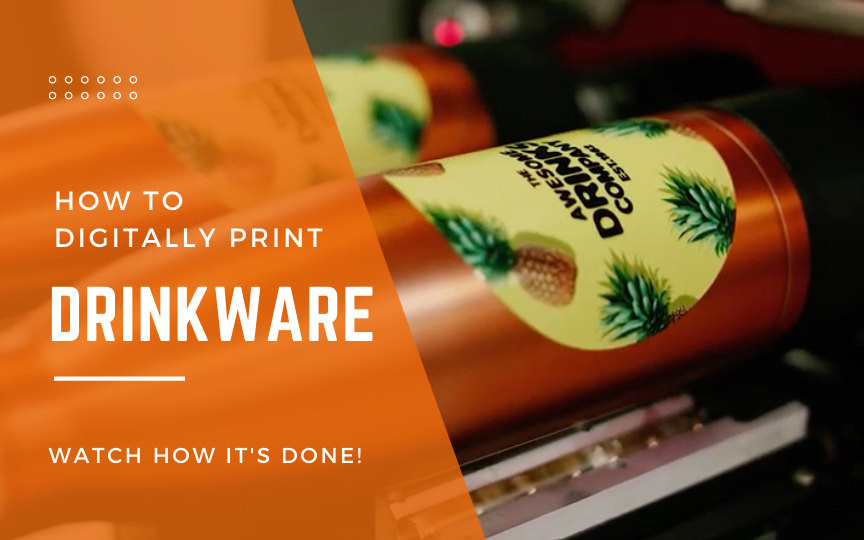
Digital Printing is the reproduction of digital images on many different surfaces including papers, cardboards, magnets, plastics, films, labels, fabrics and vinyls. The Digital Printing process allows us to blend colours and create tones on your promotional items instead of flat, solid colours and also makes short runs of items more affordable than alternatives such as Litho that involve expensive setup procedures.
This process requires an image resolution of no less than 300dpi – lower resolution images will result in a poor quality print and may be rejected.
Image Type: Vector or Bitmap
Resolution: High – 300dpi
File Formats: EPS, AI, PDF, JPG or TIFF
Colours: CMYK - Full Colour
What is Litho Printing?
Litho Printing is similar to Digital Printing in that it allows us to create full colour prints to various physical surfaces and is generally used to personalise many desktop promotional items where large quantities are required. The Litho process also requires high resolution artwork (minimum of 300dpi).
Image Type: Vector or Bitmap
Resolution: High – 300dpi
File Formats: EPS, AI, PDF, JPG or TIFF
Colours: CMYK - Full Colour
What is Screen Printing?
Screen Printing is an age-old process which works by creating different screens for each colour present in a piece of artwork. These screens allow ink to be pushed through onto the target product and left to dry, building up each application of colour through the process.
Screen printing is generally used for creating clear print made up of large, flat areas of solid colour and clear outlined text so that the separation of each colour is effective.
Image Type: Vector
Resolution: High (300dpi)
File Formats: EPS, AI, PDF
Colours: Spot Colours - Pantone References Required
How does Engraving work?
Engraving is the process of ‘etching’ a design into a hard, flat surface by carving grooves into it. These days this is achieved using lasers and is generally used for higher quantity order runs.
Image Type: Vector
Resolution: N/A
File Formats: EPS, AI, PDF
Colours: N/A
What are Vinyl Skins?
Vinyl skins are an innovative product made in the UK utilising the latest material, printing and cutting technology – premium patented 3MTM adhesive vinyl and high quality printing using a 4 colour process. They are used on devices such as laptops, memory sticks, mobile phones and gaming devices.
Artwork can be photographic or illustration based and is locked away behind the laminated surface to protect the device from everyday wear. Skins are precision cut to order and follow the unique contours of the individual device being catered for.
Vinyl skins are also easy to remove - they simply peel off the device and leave absolutely no residue or marks.
Image Type: Vector or Bitmap
Resolution: High – 300dpi
File Formats: EPS, AI, PDF, JPG or TIFF
Colours: CMYK - Full Colour
How does embossing work?
Embossing products is essentially a ‘stamping’ process that leaves the impression of a design on a product once the compression is released. You have two options when it comes to embossing your promotional items – either leave the impression the same colour as the product that is being embossed, or choose to fill it with a metallic paint in either gold or silver.
Image Type: Vector
File Formats: EPS, AI, PDF
What is Transfer Printing?
Transfer printing is generally used to apply an image to a curved or uneven surface and is often used to print on porcelain although it can also be applied to various other surfaces too.
Artwork for transfer printing can be either photographic or illustrative based, but all images provided should be of a high resolution.
Image Type: Vector or Bitmap
Resolution: High – 300dpi
File Formats: EPS, AI, PDF, JPG or TIFF
Colours: CMYK - Full Colour
How do you embroider items?
![]() | Embroidering items allows you to roll your brand out through your workforce. Designs can be applied to fabric and other materials by stitching strands of coloured thread using machines to allow for mass production. Pantone colours can be matched, though we a different colour coding system based on the threads available so matching can often be as close as possible but not exact. When creating artwork with embroidery in mind, it is best avoid blends of colour and work with solid colours instead. |
Image Type: Vector
Resolution: High (300dpi)
File Formats: EPS, AI, PDF, JPG, TIFF
Colours: Spot Colours - Pantone References Required
What is moulding and when is it used?
Moulding is used to create bespoke products from various materials such as stress balls, recycled plastic or a USB memory stick for example. These type of items can all be set within custom moulds to suit your exact requirements. Obviously there are some setup costs involved in creating the mould at the start of the process so this type of work is often uneconomical until you are looking at larger quantities. Please note that we produce our moulds based on vector-based artwork only.
Image Type: Vector
File Formats: EPS, AI, PDF
Colours: Spot Colours - Pantone References Required